Buy inie.eu ?
We are moving the project
inie.eu .
Are you interested in purchasing the domain
inie.eu ?
domain@kv-gmbh.de · 0541-91531010
Buy inie.eu ?
What are levers and fulcrums?
Levers are simple machines that consist of a rigid bar or beam that pivots around a fixed point called a fulcrum. The lever is used to amplify force or to provide a mechanical advantage in moving an object. The position of the fulcrum relative to the applied force and the load determines the type of lever and its mechanical advantage. Levers and fulcrums are commonly found in everyday objects such as seesaws, scissors, and crowbars. **
What are the laws of levers?
The laws of levers are principles that describe how levers work. There are three main laws of levers: 1) The law of the lever states that the product of the force applied to a lever and the distance from the fulcrum is constant. 2) The law of equilibrium states that the sum of the clockwise moments about the fulcrum is equal to the sum of the anticlockwise moments. 3) The law of the machine states that the mechanical advantage of a lever is equal to the ratio of the distance from the fulcrum to the point where the input force is applied to the distance from the fulcrum to the point where the output force is applied. **

Similar search terms for Levers
Top-Angebote
Products related to Levers:
-
Rueber Innovative Nutrient Nourishing Mask 500mLA hair mask. It a nourishing hair mask rich in amino acids that provides elasticity, vigor, and shine to hair. Its acidic pH protects dry or very dry hair by nourishing and eliminating static electricity. Intensely nourishes and revitalizes dry hair. Improves elasticity and shine. Protects hair structure with an acidic pH.24,01 £*Shipping: 10,02 £Secure redirect to the provider



-
What's new with the brake levers?
The brake levers have been redesigned to be more ergonomic and comfortable for the rider's hands. They now have a more streamlined and sleek appearance, with improved grip and control. Additionally, the brake levers now have adjustable reach, allowing riders to customize the distance to better suit their hand size and riding style. Overall, the new brake levers offer improved performance and comfort for a better riding experience. **
-
How do bicycle brake levers work?
Bicycle brake levers work by pulling a cable that is connected to the brake calipers. When the lever is squeezed, the cable is pulled, causing the brake calipers to close around the wheel rim or rotor, creating friction and slowing down the bike. This friction ultimately stops the bike by converting the kinetic energy of the moving bike into heat energy. The harder the lever is squeezed, the more force is applied to the brakes, resulting in a quicker stop. **
-
Are clutch and brake levers universal?
Clutch and brake levers are not universal, as they can vary in size, shape, and mounting style depending on the make and model of the motorcycle. Different manufacturers may use different designs for their levers, so it's important to ensure that you are purchasing the correct levers for your specific bike. Additionally, some aftermarket levers may be designed to be adjustable or have different features, so it's important to choose the right ones for your bike. **
-
What is a physics problem about levers?
A physics problem about levers could involve calculating the mechanical advantage of a lever system. This would require determining the ratio of the output force to the input force, which is influenced by the lengths of the lever arms on either side of the fulcrum. By applying the principle of conservation of energy and understanding the relationship between force, distance, and work, one can solve for the mechanical advantage of the lever system. This type of problem is common in physics and helps students understand the concept of leverage and how it can be used to amplify or redirect forces. **

Why do the bicycle brake levers wobble?
The wobbling of bicycle brake levers can be caused by a few different factors. One common reason is that the handlebars or the brake levers themselves may be loose, causing them to move and wobble when pressure is applied. Another possibility is that the brake cables may be worn or frayed, causing the levers to move unevenly. Additionally, the brake lever pivot point may be worn out or damaged, leading to wobbling. It's important to address these issues promptly to ensure the brakes function properly and safely. **
How to calculate the laws of levers?
To calculate the laws of levers, you need to understand the three main components of a lever: the fulcrum, the effort, and the load. The lever principle states that the effort multiplied by its distance from the fulcrum is equal to the load multiplied by its distance from the fulcrum. This can be represented by the formula Effort x Effort Arm = Load x Load Arm. By knowing the values of two of these components, you can calculate the third using this formula. **
Top-Angebote
Products related to Levers:
-
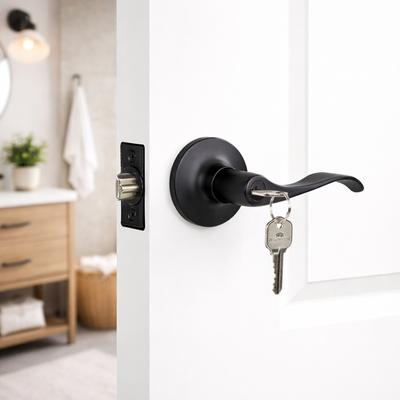
Design House Stratford Keyed Entry, Passage or Privacy Door LeversThe Design House Stratford Door Lever collection in Matte Black offers a complete solution for interior and exterior residential door hardware, including passage, privacy, and keyed entry functions to suit a variety of applications.47,99 $*Shipping: 0,00 $Secure redirect to the provider
-
StayWell Innovative Anti Fungal Laser Pen With Cutting Edge Fungal Infections Removal And Safe for Skin Technology Innovative Anti Fungal Laser Pen With Cutting Edge Fungal Infections Removal And Safe for Skin TechnologyDo you avoid going barefoot or wearing sandals because of your unsightly nails If so, our AntiFungal Laser Pen is the solution you've been looking for. Our laser pen combines the power of the infrared pulsed laser and blue light to exterminate...20,97 $*Shipping: 0,00 $Secure redirect to the provider
-
What are levers and fulcrums?
Levers are simple machines that consist of a rigid bar or beam that pivots around a fixed point called a fulcrum. The lever is used to amplify force or to provide a mechanical advantage in moving an object. The position of the fulcrum relative to the applied force and the load determines the type of lever and its mechanical advantage. Levers and fulcrums are commonly found in everyday objects such as seesaws, scissors, and crowbars. **
-
What are the laws of levers?
The laws of levers are principles that describe how levers work. There are three main laws of levers: 1) The law of the lever states that the product of the force applied to a lever and the distance from the fulcrum is constant. 2) The law of equilibrium states that the sum of the clockwise moments about the fulcrum is equal to the sum of the anticlockwise moments. 3) The law of the machine states that the mechanical advantage of a lever is equal to the ratio of the distance from the fulcrum to the point where the input force is applied to the distance from the fulcrum to the point where the output force is applied. **
-
What's new with the brake levers?
The brake levers have been redesigned to be more ergonomic and comfortable for the rider's hands. They now have a more streamlined and sleek appearance, with improved grip and control. Additionally, the brake levers now have adjustable reach, allowing riders to customize the distance to better suit their hand size and riding style. Overall, the new brake levers offer improved performance and comfort for a better riding experience. **
-
How do bicycle brake levers work?
Bicycle brake levers work by pulling a cable that is connected to the brake calipers. When the lever is squeezed, the cable is pulled, causing the brake calipers to close around the wheel rim or rotor, creating friction and slowing down the bike. This friction ultimately stops the bike by converting the kinetic energy of the moving bike into heat energy. The harder the lever is squeezed, the more force is applied to the brakes, resulting in a quicker stop. **
Similar search terms for Levers
-
Rueber Innovative Nutrient Nourishing Mask 500mLA hair mask. It a nourishing hair mask rich in amino acids that provides elasticity, vigor, and shine to hair. Its acidic pH protects dry or very dry hair by nourishing and eliminating static electricity. Intensely nourishes and revitalizes dry hair. Improves elasticity and shine. Protects hair structure with an acidic pH.24,01 £*Shipping: 10,02 £Secure redirect to the provider
-
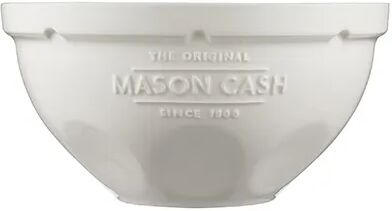
Mason Cash Innovative Kitchen Mixing BowlThis Mason Cash mixing bowl has a capacity of 4 litres and features tilt support in the design and shape of the bowl. As the bowl is tilted, the indents in the outer surface of the bowl provided angled support when mixing and beating the contents of the bowl. The bowl is made from stoneware and is finished with a durable and hard wearing glaze. The Mason Cash mixing bowl is suitable for warming food in the microwave and is dishwasher safe for easy and convenient cleaning.24,50 £*Shipping: 3,50 £Secure redirect to the provider
-
Design House Stratford Keyed Entry, Passage or Privacy Door LeversThe Design House Stratford Door Lever collection in Matte Black offers a complete solution for interior and exterior residential door hardware, including passage, privacy, and keyed entry functions to suit a variety of applications.35,23 $*Shipping: 0,00 $Secure redirect to the provider
-
Are clutch and brake levers universal?
Clutch and brake levers are not universal, as they can vary in size, shape, and mounting style depending on the make and model of the motorcycle. Different manufacturers may use different designs for their levers, so it's important to ensure that you are purchasing the correct levers for your specific bike. Additionally, some aftermarket levers may be designed to be adjustable or have different features, so it's important to choose the right ones for your bike. **
-
What is a physics problem about levers?
A physics problem about levers could involve calculating the mechanical advantage of a lever system. This would require determining the ratio of the output force to the input force, which is influenced by the lengths of the lever arms on either side of the fulcrum. By applying the principle of conservation of energy and understanding the relationship between force, distance, and work, one can solve for the mechanical advantage of the lever system. This type of problem is common in physics and helps students understand the concept of leverage and how it can be used to amplify or redirect forces. **
-
Why do the bicycle brake levers wobble?
The wobbling of bicycle brake levers can be caused by a few different factors. One common reason is that the handlebars or the brake levers themselves may be loose, causing them to move and wobble when pressure is applied. Another possibility is that the brake cables may be worn or frayed, causing the levers to move unevenly. Additionally, the brake lever pivot point may be worn out or damaged, leading to wobbling. It's important to address these issues promptly to ensure the brakes function properly and safely. **
-
How to calculate the laws of levers?
To calculate the laws of levers, you need to understand the three main components of a lever: the fulcrum, the effort, and the load. The lever principle states that the effort multiplied by its distance from the fulcrum is equal to the load multiplied by its distance from the fulcrum. This can be represented by the formula Effort x Effort Arm = Load x Load Arm. By knowing the values of two of these components, you can calculate the third using this formula. **
* All prices are inclusive of VAT and, if applicable, plus shipping costs. The offer information is based on the details provided by the respective shop and is updated through automated processes. Real-time updates do not occur, so deviations can occur in individual cases. ** Note: Parts of this content were created by AI.